FSSAI Turns Lens on “Natural” & “Healthy” Labels: What Food Brands Need to Know

For years, words like:
- Natural
- Healthy
- Pure
- Wholesome
- No Added Sugar
- Plant-Based
have become powerful marketing tools in the food industry.
Consumers increasingly seek healthier options, and food brands have responded by highlighting these attributes prominently on packaging and advertisements.
However, recent developments indicate that India’s food regulator is taking a closer look at how such claims are being used.
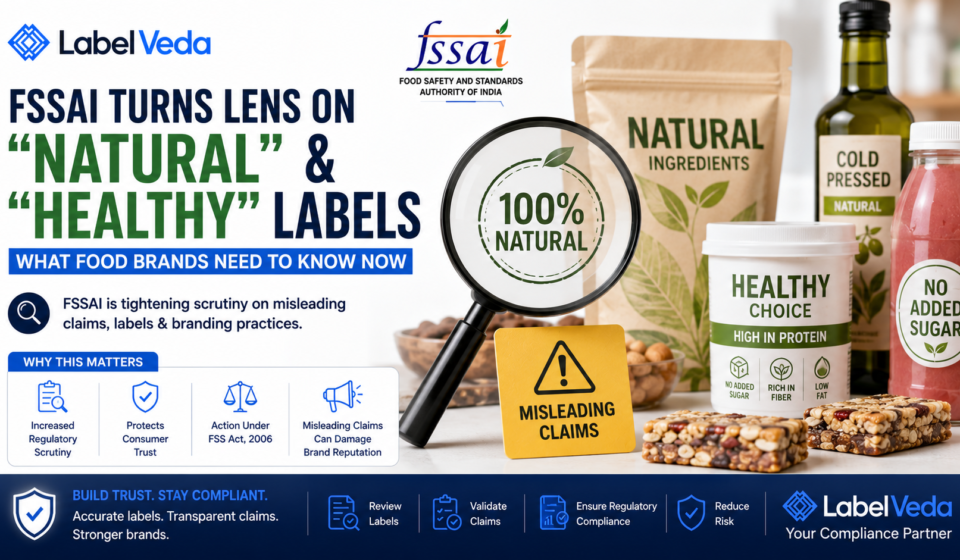
Reports suggest that FSSAI has intensified its scrutiny of products carrying terms such as “Natural” and “Healthy”, while also examining broader concerns around potentially misleading claims and branding practices.
For food brands, this serves as an important reminder:
Marketing claims must be supported, accurate, and compliant.
Why FSSAI Is Focusing on These Claims
Consumer purchasing decisions are heavily influenced by front-of-pack messaging.
A claim such as:
✔ Healthy
✔ Natural
✔ Pure
can significantly affect how consumers perceive a product.
The challenge arises when such claims create impressions that may not fully align with the product’s ingredients, nutritional profile, or regulatory requirements.
From a regulatory perspective, food labels should help consumers make informed choices—not create confusion.
The Growing Scrutiny Around “Natural”
The word “Natural” has become one of the most commonly used terms on food packaging.
It appears on:
- Snacks
- Oils
- Beverages
- Health supplements
- Protein products
- Ready-to-eat foods
However, the interpretation of “Natural” can vary significantly between consumers and brands.
Questions regulators may consider include:
- Does the product contain highly processed ingredients?
- Are additives present?
- Is the claim adequately substantiated?
- Could the claim mislead consumers?
As scrutiny increases, brands should carefully evaluate whether their packaging and marketing communications support such positioning.
Why “Healthy” Is Also Under the Spotlight
Consumers often associate the term “Healthy” with:
- Better nutrition
- Lower risk
- Superior ingredients
- Positive health outcomes
However, health-related perceptions can become problematic if claims are not properly supported.
This is especially relevant for:
- Functional foods
- Nutraceuticals
- Protein supplements
- Fortified products
- Wellness beverages
The food industry is witnessing increased attention on how these products are marketed and presented.
This Is Not Just About Labels
Many businesses assume compliance applies only to the packaging artwork.
In reality, scrutiny often extends to:
- Product labels
- Advertisements
- Social media promotions
- Ecommerce listings
- Marketplace content
- Website claims
A claim appearing on an Amazon, Flipkart, Blinkit, Zepto, or Instamart listing can attract the same level of attention as one printed on the package itself.
The Risk of Misleading Claims
Misleading claims can result in:
- Regulatory notices
- Product reviews
- Marketplace challenges
- Consumer complaints
- Brand reputation issues
Even when there is no intention to mislead, vague or poorly substantiated claims can create compliance concerns.
Categories Most Likely to Be Impacted
Nutraceuticals & Health Supplements
One of the fastest-growing sectors in India.
These products frequently use claims around:
- Immunity
- Energy
- Wellness
- Performance
- Recovery
making compliance particularly important.
Edible Oils
Health positioning and nutritional messaging often play a major role in consumer purchasing decisions.
Functional Foods
Products marketed as healthier alternatives may attract additional scrutiny if claims are not clearly supported.
Plant-Based & Vegan Products
As these categories continue to grow, labeling and positioning practices are likely to receive greater regulatory attention.
What Food Brands Should Do Now
Rather than reacting to regulatory notices, brands should proactively review:
Front-of-Pack Claims
- Natural
- Healthy
- Pure
- High Protein
- No Added Sugar
- Low Fat
Nutritional Information
Ensure consistency between:
- Claims
- Ingredients
- Nutrition declarations
Marketing Communications
Review:
- Social media content
- Marketplace listings
- Product descriptions
- Advertising materials
Supporting Documentation
Maintain documentation that supports any claim made on packaging or promotional materials.
Why This Matters for Startups
Many emerging food brands focus heavily on branding and customer acquisition.
However, regulatory compliance becomes increasingly important as brands scale into:
- Modern retail
- Ecommerce
- Quick commerce
- Exports
- Institutional sales
Building compliant packaging and marketing practices early can reduce future risk.
How LabelVeda Helps
As scrutiny around food claims continues to increase, brands need practical ways to review labels before products reach the market.
LabelVeda helps food businesses:
- Review food labels
- Identify compliance gaps
- Check declarations
- Evaluate claims
- Generate visual compliance reports
- Improve marketplace readiness
Whether you’re launching a startup product or managing an established portfolio, early-stage compliance review can help reduce costly corrections later.
Key Takeaways
✅ FSSAI is increasing focus on “Natural” and “Healthy” claims.
✅ Misleading or poorly supported claims may attract regulatory attention.
✅ Compliance applies across packaging, advertising, and digital channels.
✅ Nutraceuticals, functional foods, oils, and wellness products are likely to face greater scrutiny.
✅ Proactive label review can help brands reduce risk and improve compliance readiness.
Final Thoughts
Regulators want accuracy.
And brands need to balance effective marketing with responsible communication.
The growing focus on “Natural” and “Healthy” claims signals a broader shift toward evidence-based food labeling and consumer protection.
For food businesses, the message is clear:
Every claim on a label should be able to stand up to scrutiny.
Before Your Next Packaging Approval
Review your claims, declarations, and label content before printing, submission, or marketplace onboarding.
Use LabelVeda to identify compliance gaps and improve food label readiness.