FSSAI Signals Stronger Enforcement, Digital Compliance & Nutraceutical Label Scrutiny at 50th CAC Meeting

FSSAI Signals Stronger Enforcement, Digital Compliance & Nutraceutical Label Scrutiny at 50th CAC Meeting
More inspections.
More food sampling.
Greater scrutiny of nutraceutical labels.
Increased focus on misleading claims.
And a continued push toward digital compliance systems.
These were some of the key themes emerging from the 50th meeting of the Central Advisory Committee (CAC) of the Food Safety and Standards Authority of India (FSSAI), held in Shimla shortly after World Food Safety Day 2026.
For food brands, nutraceutical companies, consultants, importers, and marketplace sellers, the message is becoming increasingly clear:
Compliance expectations are rising.
What Is the Central Advisory Committee (CAC)?
The Central Advisory Committee serves as an important platform where FSSAI, State Food Authorities, industry stakeholders, laboratories, and regulatory representatives discuss food safety priorities and implementation strategies.
While the CAC does not introduce regulations directly, its discussions often provide valuable insight into where enforcement and regulatory focus are heading.
1. FSSAI Wants Stronger Enforcement Across India
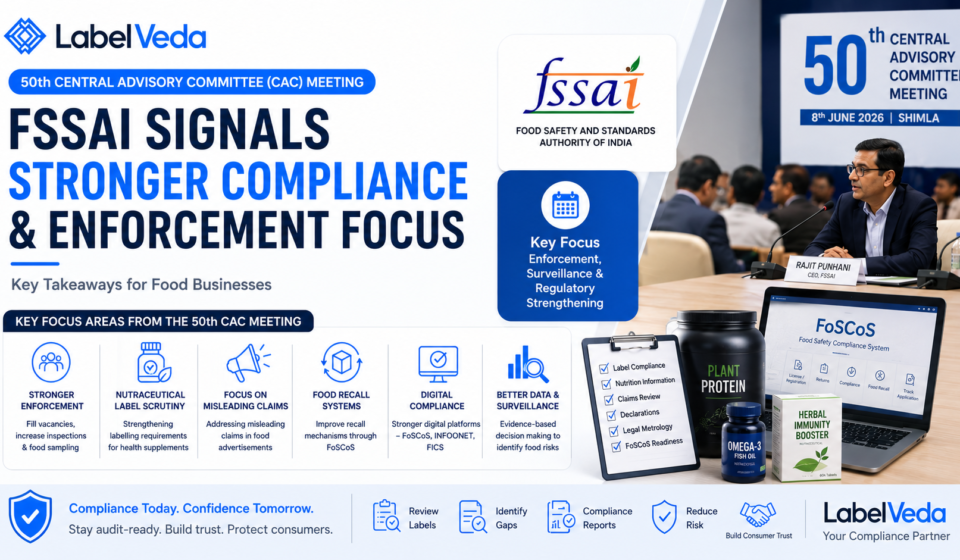
One of the strongest messages from the meeting was the need to increase regulatory capacity and strengthen enforcement activities.
FSSAI CEO Shri Rajit Punhani directed States and Union Territories to expedite recruitment of Food Safety Officers (FSOs) and Designated Officers (DOs) while increasing food sampling and surveillance activities across the country.
For Food Business Operators (FBOs), this means:
- More inspections
- More sampling
- More surveillance
- Greater scrutiny of food products
Why This Matters
Many businesses tend to view compliance as something that only becomes important during licensing or inspections.
However, increased field-level enforcement means food labels, claims, declarations, and product information are likely to receive more attention than before.
2. Nutraceutical & Health Supplement Labelling Is Under Focus
One of the most important takeaways for LabelVeda users is the explicit focus on:
strengthening implementation of labelling requirements for nutraceuticals and health supplements.
This is significant because the nutraceutical category continues to experience rapid growth in India.
Products such as:
- Protein supplements
- Functional beverages
- Herbal products
- Health supplements
- Sports nutrition products
often involve complex labeling requirements and claim-related considerations.
Why Brands Should Pay Attention
Nutraceutical products frequently contain:
- Multiple active ingredients
- Functional claims
- Health positioning
- Nutrition communication
These factors increase compliance complexity and regulatory attention.
3. Misleading Claims Remain a Major Concern
The CAC discussions also focused on:
addressing misleading claims in food advertisements.
This reflects a broader regulatory trend that has been developing over the past several years.
Claims such as:
- Immunity boosting
- Fat burning
- Healthy
- Sugar-free
- Natural
- High protein
must be used carefully and responsibly.
Why This Matters for Food Brands
Consumers are becoming more aware of food marketing claims.
At the same time, regulators are paying closer attention to how products are positioned.
This means brands should evaluate both:
- Packaging claims
- Advertising claims
before launch.
4. Food Recall Systems Are Being Strengthened
Another important area discussed was the recently operationalized Food Recall Module on FoSCoS. States and Union Territories were advised to improve implementation and reporting of recall activities.
Food recalls are becoming increasingly important because they:
- Protect consumers
- Improve traceability
- Strengthen accountability
- Enhance regulatory oversight
For brands, this signals growing expectations around documentation and product management processes.
5. India’s Food Compliance Ecosystem Is Becoming Digital
Perhaps the most important long-term signal from the meeting was FSSAI’s emphasis on digital transformation.
The CAC highlighted India’s transition from largely physical, application-based systems to digital regulatory platforms including:
- FoSCoS
- INFOLNET
- FICS
resulting in greater transparency, efficiency, and ease of compliance.
What This Means for Food Businesses
Food compliance is increasingly becoming:
- Digital
- Structured
- Data-driven
- Traceable
The days of fragmented, paper-heavy compliance processes are gradually giving way to integrated digital systems.
6. Better Data, Better Surveillance
The committee also focused on improving data quality and evidence-based decision making to identify emerging food safety risks and support targeted interventions.
This suggests that future enforcement activities may become more focused and intelligence-driven.
Rather than broad inspections alone, regulators are likely to use data to identify high-risk categories and compliance gaps.
What Food Brands Should Do Now
The key takeaway from the 50th CAC meeting is not panic.
It is preparedness.
Food businesses should focus on:
✔ Reviewing label declarations
✔ Verifying nutrition information
✔ Evaluating product claims
✔ Strengthening internal compliance workflows
✔ Maintaining documentation
✔ Monitoring regulatory updates
✔ Preparing for increased scrutiny in nutraceutical categories
How LabelVeda Helps
As food compliance becomes increasingly digital and data-driven, businesses need faster ways to review packaging and identify potential compliance gaps before products reach the market.
LabelVeda helps brands:
- Review food labels
- Generate visual compliance reports
- Identify missing declarations
- Check FSSAI and Legal Metrology requirements
- Validate packaging before printing or submission
For food brands, consultants, and nutraceutical companies, early-stage compliance review can significantly reduce rework and regulatory risk.
The Bigger Picture
The 50th CAC meeting wasn’t about introducing a single new regulation.
It was about signaling the future direction of India’s food safety ecosystem.
The themes were clear:
- Stronger enforcement
- Better surveillance
- Increased focus on nutraceuticals
- Greater scrutiny of claims
- Digital compliance systems
- Evidence-based regulation
Together, these developments indicate that compliance is becoming an increasingly important competitive advantage for food businesses operating in India.
Final Thoughts
The food industry is evolving rapidly.
Regulators are strengthening enforcement.
Consumers are demanding greater transparency.
Digital compliance systems are becoming the norm.
For food brands, consultants, and manufacturers, staying ahead of compliance requirements is no longer just a regulatory necessity—it is becoming a business necessity.
The brands that build strong compliance processes today will be better positioned to navigate tomorrow’s regulatory landscape.
Before Your Next Product Launch
Review your labels before printing, submission, marketplace onboarding, or regulatory review.
Use LabelVeda to identify compliance gaps early and improve packaging readiness before products reach the market.