What Is Healthwashing? Examples, Risks & FSSAI’s Latest Focus

Have you ever picked up a food product simply because the packaging looked healthy?
Words like:
- Natural
- Healthy
- High Protein
- No Added Sugar
- Multigrain
- Immunity Booster
- Low Fat
- Rich in Fibre
can instantly create the impression that a product is good for you.
But does the packaging always tell the complete story?
This practice is commonly known as healthwashing.
What Is Healthwashing?
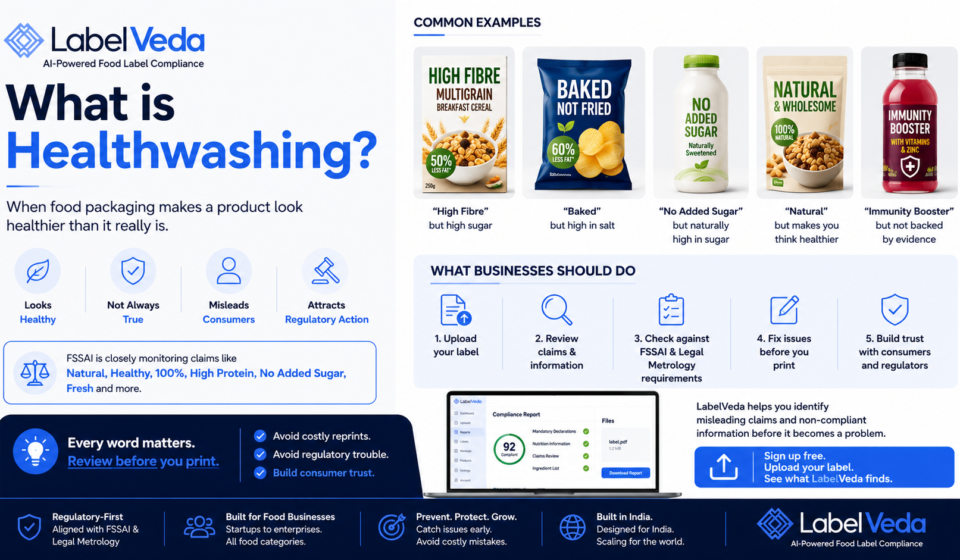
Healthwashing is the use of words, colours, imagery, or marketing claims that make a product appear healthier than it actually is.
It doesn’t necessarily mean the information is false.
The concern is that the overall presentation may create a misleading impression for consumers.
For example:
- A sugary cereal prominently displaying “High in Fibre.”
- A snack labelled “Baked” while still being high in salt.
- A beverage highlighting “No Added Sugar” despite containing naturally high levels of sugar.
- Packaging dominated by words like “Natural” or “Healthy”, even though consumers may infer broader health benefits.
Common Examples of Healthwashing
Some of the most common front-of-pack claims include:
- Natural
- Healthy
- 100% Pure
- High Protein
- Rich in Fibre
- No Added Sugar
- Low Fat
- Multigrain
- Immunity Support
- Organic
Each of these claims may have specific regulatory requirements or conditions depending on the product and applicable regulations.
Why Is Everyone Talking About It Now?
In recent months, regulators have increased scrutiny of food packaging and product claims.
Recent actions have involved claims and descriptions such as:
- Energy Drink
- Fresh
- Healthy
- Natural
- High Protein
- No Added Sugar
- Aged
The broader message is clear:
Consumers should not be misled by product names or marketing claims.
Healthwashing Isn’t Always Intentional
Many food businesses don’t deliberately mislead consumers.
Often, claims are added during product development, marketing, or packaging design without a full regulatory review.
A designer may choose wording that sounds appealing.
A marketing team may borrow phrases commonly used in the industry.
A product team may assume a claim is acceptable because competitors use it.
That’s why structured label reviews are becoming increasingly important.
How Businesses Can Reduce Risk
Before approving packaging, review:
✅ Product Name
✅ Front-of-Pack Claims
✅ Nutrition Information
✅ Ingredient List
✅ Mandatory Declarations
✅ Category-Specific Requirements
A review before printing is often simpler and more cost-effective than updating packaging after launch.
Every Word Matters
Health-conscious consumers rely on labels to make informed decisions.
Clear, accurate, and compliant communication builds trust—not just with regulators, but with customers as well.
Every word on your label matters.
How LabelVeda Helps
LabelVeda helps food businesses review packaging before it goes to print.
Upload your label, and our AI reviews:
- Product Names
- Product Claims
- Ingredient Lists
- Nutrition Information
- Mandatory Declarations
- FSSAI Requirements
- Legal Metrology Requirements
Receive a detailed compliance report highlighting potential issues before your packaging reaches the market.
Great Products Deserve Compliant Packaging
🚀 Sign up for free. Upload your label. See what LabelVeda finds.