FSSAI Orders Beverage Brands to Remove “Energy Drink” Labels: What Food Businesses Need to Know

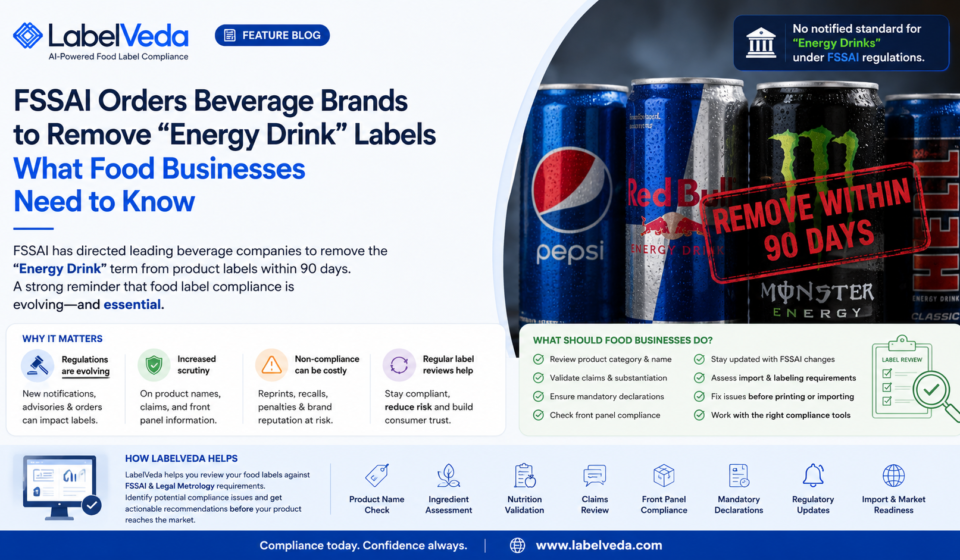
The Food Safety and Standards Authority of India (FSSAI) has directed several leading beverage companies, including PepsiCo, Red Bull, Monster, Reliance Consumer Products, and Hell Energy, to remove the term “Energy Drink” from product labels within 90 days.
The move highlights an important message for every food business:
Food labels are not static. Regulatory expectations evolve, and businesses must adapt to remain compliant.
If your business manufactures, imports, or markets packaged food products, this development is a reminder to review your labels regularly.
What Changed?
According to recent reports, FSSAI has instructed beverage manufacturers to stop using the term “Energy Drink” on product labels because there is currently no notified product standard under FSSAI regulations for products classified as “Energy Drinks.”
The regulator has also raised concerns over marketing statements such as:
- “Vitalizes Body and Mind”
- “Helps in General Weakness”
- Similar promotional claims that may mislead consumers.
Companies have been given a 90-day period to update their packaging and labels.
Why Does This Matter?
Many businesses assume that if a product has been on the market for years, its label is automatically compliant.
However, regulations continue to evolve through:
- New notifications
- Advisories
- Orders
- Clarifications
- Court rulings
- Scientific assessments
A label that was acceptable last year may require changes today.
This Isn’t Just About Energy Drinks
The latest directive reflects a broader trend of increased scrutiny on:
- Product names
- Nutrition claims
- Health claims
- Functional claims
- Front-of-pack declarations
- Ingredient declarations
- Mandatory labeling requirements
FSSAI has been actively reviewing labels to ensure consumers receive accurate and non-misleading information.
What Should Food Businesses Do?
Whether you’re launching a new product or importing an existing one, reviewing your labels should be part of your compliance process.
Ask yourself:
- Is the product category correctly represented?
- Are all claims supported under applicable regulations?
- Are mandatory declarations complete?
- Does the front panel comply with current requirements?
- Have any recent regulatory changes affected your product?
Identifying issues before printing packaging can save significant time and cost.
Why Importers Should Pay Attention
Imported products often require modifications before entering the Indian market.
Common areas requiring review include:
- Product classification
- Ingredient compliance
- Nutrition declaration
- Product claims
- Mandatory declarations
- Vegetarian/Non-Vegetarian symbols
- Legal Metrology requirements
- Country-specific labeling requirements
A product that complies in another country may still require changes before it can be marketed in India.
How LabelVeda Helps
LabelVeda helps food businesses review food labels against applicable FSSAI and Legal Metrology requirements.
Our platform can assess:
- Product Name
- Ingredient Assessment
- Nutrition Information
- Product Claims
- Front Panel Compliance
- Mandatory Declarations
- Packaging Requirements
- Regulatory Notices
By identifying potential compliance issues early, businesses can make informed changes before printing or importing products.
Compliance Is an Ongoing Process
The recent action affecting major beverage brands demonstrates that no business is immune to regulatory changes.
Regular label reviews help businesses:
- Reduce compliance risks
- Avoid costly packaging reprints
- Stay aligned with evolving regulations
- Prepare products for the Indian market with greater confidence
Review Before You Print.
Whether you’re a food manufacturer, importer, startup, or regulatory consultant, reviewing your labels before they reach the market is one of the simplest ways to reduce compliance risk.
Try LabelVeda today:
🌐 https://www.labelveda.com

Disclaimer: This article is intended for educational purposes and summarizes publicly reported regulatory developments. Businesses should refer to official FSSAI notifications and consult qualified regulatory professionals where necessary.