Is Your Whisky Really Aged? FSSAI Questions Age Claims on Alcohol Labels

When you see the word “Aged” on a whisky bottle, what do you assume?
That it has matured naturally for the number of years mentioned?
That its flavour comes from the ageing process?
These are exactly the kinds of questions India’s food regulator is now asking.
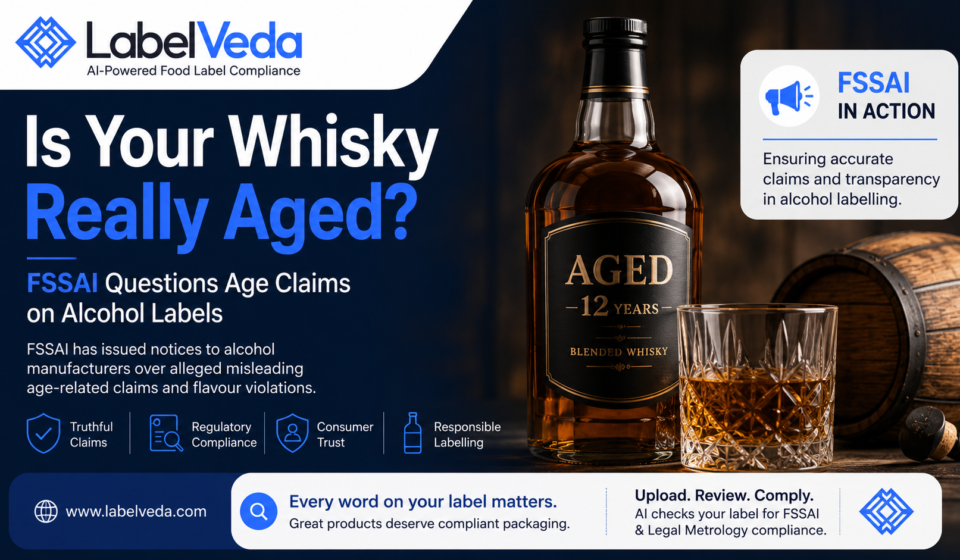
The Food Safety and Standards Authority of India (FSSAI) has issued notices to alcoholic beverage manufacturers over alleged misleading age-related claims and the use of unauthorised added flavours, signalling increased scrutiny of how products are described and presented to consumers.
What Is FSSAI Reviewing?
According to recent reports, FSSAI has raised concerns regarding:
- Alleged misleading age-related claims
- Use of unauthorised added flavours
- Compliance with existing food safety and labelling regulations
- Transparency in how alcoholic beverages are represented to consumers
Manufacturers have reportedly been asked to explain why regulatory action should not be initiated if the alleged non-compliance is established.
Why Does the Word “Aged” Matter?
For consumers, words like “Aged”, “Matured”, or references to years of ageing often influence buying decisions.
These aren’t just marketing terms.
They communicate information about how a product has been produced and what consumers can reasonably expect from it.
FSSAI’s regulations already set out requirements around the use of terms such as “matured” and “aged” on alcoholic beverages. For example, when an age claim uses the word “aged”, it must refer to the youngest spirit in the blend, and products labelled as “matured” must meet specified maturation requirements.
This Isn’t Just About Alcohol
If you’ve been following recent regulatory developments, a broader trend is emerging.
Recent scrutiny has involved:
- “Energy Drink”
- “Fresh”
- “Natural”
- “Healthy”
- “100% Pure”
- “No Added Sugar”
- “High Protein”
- And now, “Aged”
Different products.
Different industries.
One common message:
Every claim on a product label should accurately reflect the product.
Product Claims Build Trust
Consumers rely on packaging to make purchasing decisions.
Whether it’s a claim about:
- Age
- Freshness
- Nutrition
- Ingredients
- Health benefits
- Product identity
the information should be clear, truthful, and consistent with applicable regulations.
Good labelling isn’t just about meeting regulatory requirements.
It’s about protecting consumer trust.
What Businesses Should Review
Before approving packaging artwork, review:
✅ Product Names
✅ Front-of-Pack Claims
✅ Ingredient Information
✅ Nutrition Information
✅ Mandatory Declarations
✅ Category-Specific Regulatory Requirements
A thorough review before printing can help reduce compliance risks and avoid costly packaging changes later.
How LabelVeda Can Help
Keeping up with evolving labelling requirements can be challenging.
LabelVeda helps food and beverage businesses review labels before they go to print.
Simply upload your label.
Our AI reviews:
- Product Names
- Product Claims
- Ingredient Lists
- Nutrition Information
- Mandatory Declarations
- FSSAI Requirements
- Legal Metrology Requirements
You’ll receive a detailed compliance report highlighting potential issues and recommendations—helping you identify gaps before your product reaches the market.
Great Products Deserve Compliant Packaging
Whether it’s “Natural,” “Fresh,” “Energy Drink,” or “Aged,” the principle remains the same.
Every word on your label matters.
As regulations continue to evolve, reviewing your labels before printing is one of the simplest ways to reduce compliance risk and build consumer confidence.
Great products deserve compliant packaging.
🚀 Sign up for free. Upload your label. See what LabelVeda finds.