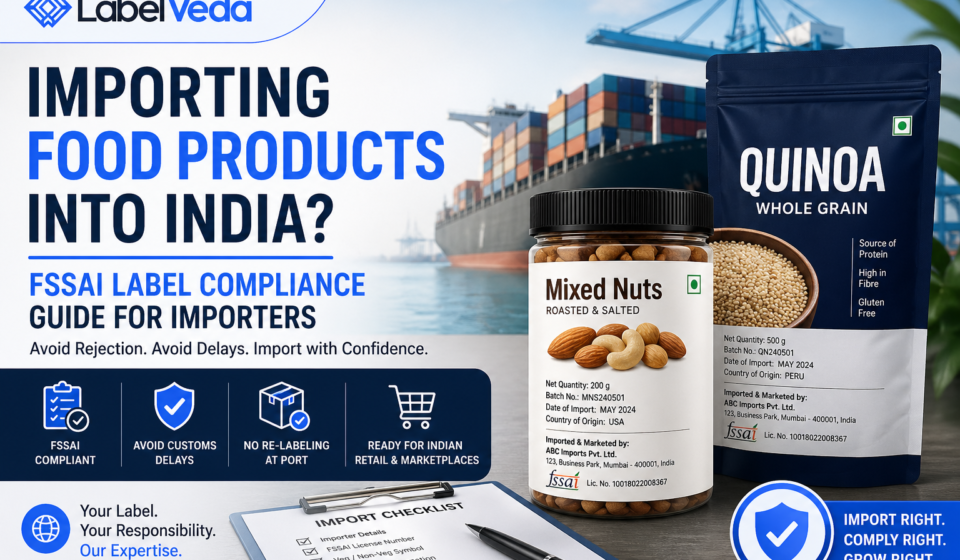
Importing Food Products into India? Your Label Can Make or Break Entry

Importing food products into India isn’t just about logistics.
You can have:
- A great product
- Strong global presence
- Perfect packaging
…and still face delays.
👉 Because of one thing: FSSAI label compliance
Why Imported Products Get Stuck
Most global brands assume:
“Our label is already compliant in our country—it should work in India.”
That’s where things go wrong.
India has its own rules, governed by
Food Safety and Standards Authority of India
👉 And they are not aligned with US/EU formats
What Happens If Your Label Isn’t Compliant
Importers typically face:
- ❌ Delays at customs clearance
- ❌ Relabeling requirements at port
- ❌ Product rejection by authorities
- ❌ Issues with modern retail & marketplaces
👉 Each delay costs money—and momentum
Key FSSAI Label Requirements for Imported Food
Here are some critical elements your label must include:
1. Importer Details (Mandatory)
You must clearly mention:
- Name & address of importer
- FSSAI license number
👉 This is often missing on global labels
2. Veg / Non-Veg Symbol
India requires:
- 🟢 Vegetarian symbol
- 🔴 Non-vegetarian symbol
👉 Mandatory—even if not required in your home country
3. Nutritional Information (Indian Format)
- Typically per 100g / 100ml
- Structured format required
👉 Directly using US/EU format can lead to issues
4. Mandatory Declarations
Labels must include:
- Net quantity
- Batch / lot number
- Date of import / packaging
- Country of origin
5. Claims & Wording
Statements like:
- “Healthy”
- “Natural”
- “Low fat”
👉 Must comply with Indian regulations
Special Case: Nutraceuticals & Health Supplements
If you are importing:
- Protein powders
- Health supplements
- Nutraceutical products
👉 The rules are stricter
You must also comply with:
- Category classification
- Usage instructions
- Disclaimers
Common Mistakes Importers Make
- Assuming global labels are acceptable
- Missing importer details
- Incorrect nutrition format
- Non-compliant claims
- Delaying compliance checks until shipment
👉 These lead to avoidable delays
The Real Cost of Non-Compliance
When labels fail compliance:
- Relabeling at port increases costs
- Clearance delays impact distribution
- Retailers may reject listing
- Launch timelines collapse
👉 Fixing labels late is always expensive
What Smart Importers Do
They don’t wait until shipment arrives.
They:
✔ Review labels before shipping
✔ Align packaging with FSSAI rules
✔ Validate claims and declarations
👉 Compliance becomes part of import planning
A Faster Way to Check Compliance
Traditionally:
- Manual review
- Consultants
- Back-and-forth revisions
Now:
👉 You can validate labels before import
Where LabelVeda Helps
LabelVeda helps importers:
- Check labels against FSSAI requirements
- Identify missing declarations
- Flag non-compliant claims
- Prepare labels before shipment
👉 So your product doesn’t get stuck later
📋 Pre-Import Checklist
Before shipping your product to India:
- Are importer details added?
- Is nutrition format aligned with India?
- Are all mandatory declarations included?
- Are claims compliant?
- Is labeling adapted for Indian regulations?
👉 If unsure, review before shipment
🚀 Final Thought
In India, your label is not just packaging.
👉 It’s your entry ticket.
Getting it right early:
- Saves time
- Reduces cost
- Speeds up market entry
👉 Before You Ship Your Product
Take a few minutes to validate your label.
👉 Use LabelVeda to check compliance gaps before importing into India.