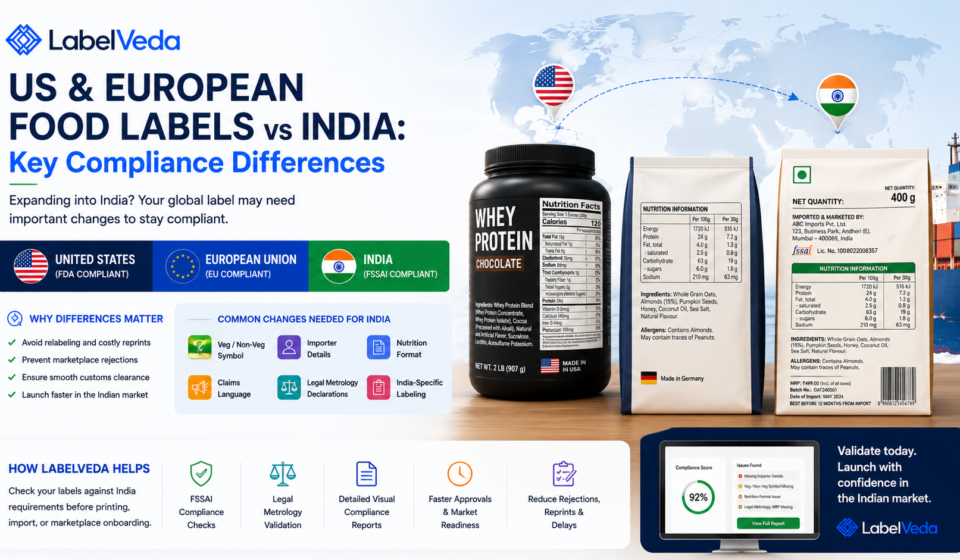
US & European Food Labels vs India: Key Compliance Differences

Many international food brands entering India assume:
“Our existing packaging should work globally.”
But in reality:
food label compliance requirements in India are significantly different from:
- the United States
- European markets
- several international regulatory systems
And these differences often lead to:
- relabeling
- delayed onboarding
- marketplace rejection
- customs issues
- compliance escalations
Why This Matters More Today
India’s food industry is growing rapidly across:
- ecommerce
- quick commerce
- modern retail
- D2C distribution
At the same time:
👉 regulatory scrutiny is increasing.
With developments like:
- stricter marketplace reviews
- growing nutraceutical oversight
- centralized systems like ePAAS
international brands entering India must now prepare for:
India-specific compliance workflows.
Food Labels in India Are Regulated Differently
Food labels in India are governed by:
- FSSAI regulations
- Legal Metrology requirements
- India-specific declaration standards
under the oversight of
Food Safety and Standards Authority of India
This means:
👉 packaging designed for the US or Europe may still require significant modifications before entering India.
Common Assumption Global Brands Make
Many brands believe:
- FDA-compliant packaging
- EU-compliant labels
- global packaging systems
…will automatically satisfy Indian requirements.
👉 This is often not the case.
Key Compliance Differences Between US/EU & India
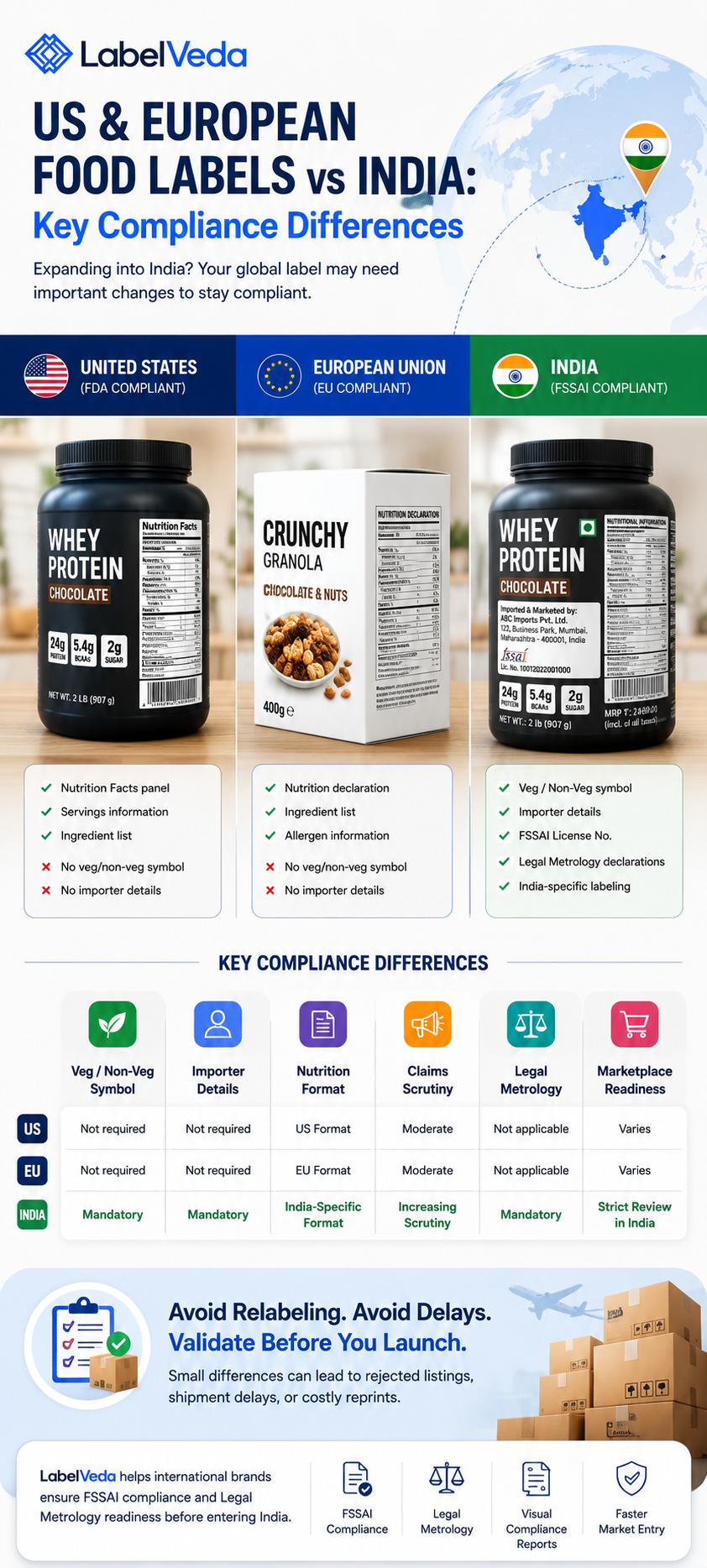
1. Vegetarian & Non-Vegetarian Symbols
One of the most visible differences in India is:
👉 Mandatory veg/non-veg symbols
Products must clearly display:
- vegetarian symbol
- non-vegetarian symbol
based on ingredients used.
This requirement is generally not present in US or European packaging systems in the same format.
2. Importer Details Are Mandatory
Imported products sold in India must typically include:
- importer name
- importer address
- importer license details
Many international labels do not originally include these declarations.
3. Nutrition Format Differences
Nutrition labeling structures can differ significantly between:
- US FDA formats
- European formats
- Indian nutrition requirements
Common issues include:
- serving format mismatch
- declaration order differences
- incomplete fields
- formatting inconsistencies
4. Claims Scrutiny Is Increasing
Claims like:
- “healthy”
- “immunity boosting”
- “fat burning”
- “high protein”
may face different levels of scrutiny in India.
This is especially important for:
- nutraceuticals
- protein products
- supplements
- functional beverages
5. Legal Metrology Requirements
India also includes:
Legal Metrology requirements
covering declarations such as:
- net quantity
- MRP
- importer/manufacturer information
- country of origin
These requirements often differ from western packaging systems.
6. Marketplace & Quick-Commerce Reviews
International brands today don’t just enter retail stores.
They also onboard onto:
- Amazon India
- Blinkit
- Zepto
- Instamart
- Flipkart
And increasingly:
👉 marketplace onboarding teams are reviewing labels more carefully.
This means even technically compliant international packaging may still face:
- onboarding delays
- relabeling requests
- documentation queries
Why Many Imported Products Need Relabeling
To adapt products for India, brands often need:
- stickers
- relabeling overlays
- packaging modifications
- additional declarations
before products can be sold compliantly.
👉 This creates additional operational complexity and cost.
Why Early Compliance Validation Matters
For international brands:
fixing packaging after import or production is expensive.
A single issue can lead to:
- shipment delays
- printing rework
- onboarding problems
- delayed market entry
👉 Early compliance review reduces these risks significantly.
Where LabelVeda Helps
LabelVeda helps brands review food labels before:
- printing
- import onboarding
- marketplace submission
- product launch
Teams can:
- identify missing declarations
- review compliance gaps
- generate visual compliance reports
- validate packaging before submission
This is especially useful for:
- international brands
- importers
- distributors
- onboarding agencies
- packaging teams
India Is a High-Growth Market—But Compliance Matters
India represents a major opportunity for global food brands.
But success requires:
localization beyond just marketing.
Packaging and compliance adaptation are now critical parts of entering the Indian market successfully.
Quick Checklist for International Food Brands
Before entering India, review:
✔ Veg/non-veg symbols
✔ Importer declarations
✔ Nutrition formatting
✔ Claims language
✔ Legal Metrology requirements
✔ Packaging consistency
✔ Marketplace onboarding readiness
Final Thought
Global packaging does not always mean globally compliant packaging.
As India’s food ecosystem becomes more structured and digitally monitored:
👉 compliance readiness is becoming essential for successful market entry.
👉 Before Launching Food Products in India
Review your packaging before printing, import submission, or marketplace onboarding.
👉 Use LabelVeda to identify food label compliance gaps for the Indian market.