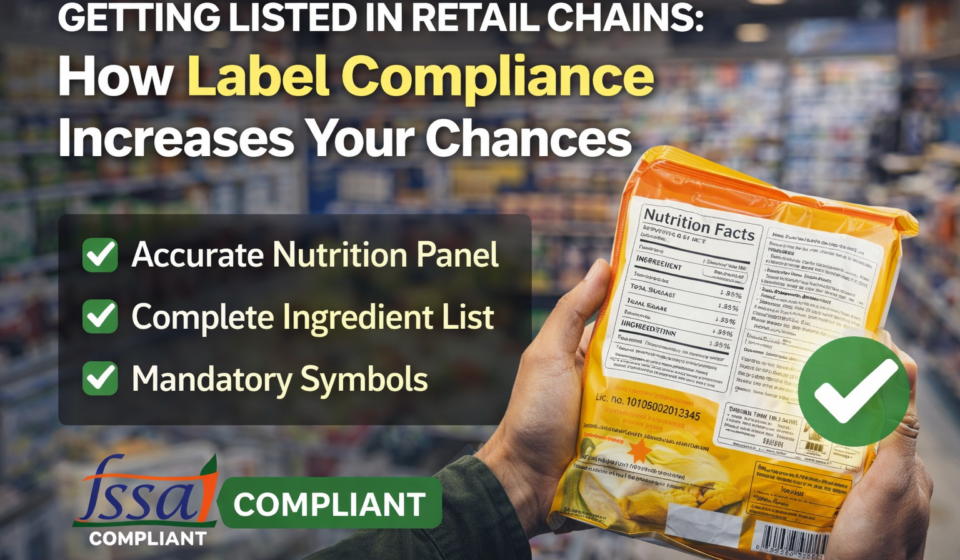
How Label Compliance Increases Your Chances of Getting Listed in Retail Chains

Getting your product into a supermarket or retail chain is a big milestone.
But many brands miss one critical detail:
👉 Your label is often the first thing that gets reviewed—and rejected.
Before buyers look at your product quality, pricing, or branding…
They check one thing first:
👉 Is this compliant?
🚨 What Retailers Actually Check First
Modern retail chains don’t take risks.
Before onboarding a product, they verify:
- Regulatory compliance
- Packaging accuracy
- Label completeness
These are based on guidelines from
Food Safety and Standards Authority of India
If your label has gaps:
👉 Your product may never reach the shelf
❌ Why Products Get Rejected Early
Many brands assume rejection happens due to:
- Pricing
- Competition
- Shelf space
But in reality, a large number of rejections happen because of:
- Missing mandatory declarations
- Incorrect nutritional format
- Improper ingredient listing
- Missing symbols or warnings
- Font size and readability issues
👉 These are basic—but critical
📉 The Cost of Getting It Wrong
A non-compliant label doesn’t just delay you.
It can lead to:
- Rejection from multiple retailers
- Reprinting costs
- Lost distribution opportunities
- Damaged brand credibility
👉 Fixing labels late is expensive
📈 How Compliance Improves Your Chances
When your label is compliant from the start:
1. Faster Approval Process
Retailers don’t need back-and-forth clarifications.
2. Higher Buyer Confidence
Your product appears ready for market, not experimental.
3. Fewer Revisions
You avoid delays and resubmissions.
4. Stronger Brand Perception
Compliance signals professionalism and reliability.
🧠 What Buyers Really Look For
Retail buyers are not just evaluating your product.
They’re asking:
- Can this product be sold without legal risk?
- Will this pass audits?
- Is the packaging complete and accurate?
👉 Compliance answers all of these instantly
⚡ Quick Check Before You Approach Retailers
Before pitching to any retail chain, make sure your label includes:
- All mandatory nutritional information
- Correct ingredient declaration
- Required symbols and warnings
- Proper font size and readability
- Accurate formatting
👉 Missing even one element can slow you down
🚀 Where Most Brands Struggle
Even experienced brands:
- Miss small details
- Use outdated formats
- Assume designers handled compliance
👉 These small gaps create big delays
🧪 A Smarter Way to Prepare Your Label
Instead of discovering issues after rejection:
👉 Review your label before submission
A structured check helps you:
- Identify gaps early
- Fix issues quickly
- Approach retailers with confidence
💡 Why This Step Matters More Than You Think
When multiple brands compete for shelf space:
👉 The “ready-to-go” product gets preference
Not necessarily the best product—
but the one that’s easiest to onboard.
💰 Think of Compliance as a Growth Lever
This is not just about avoiding rejection.
It’s about:
- Speeding up distribution
- Increasing acceptance rate
- Reducing friction in scaling
👉 Before You Pitch Your Product
Take a few minutes to review your label thoroughly.
It can:
- Improve your approval chances
- Save costly rework
- Help you move faster into retail
👉 You can run a quick compliance check using LabelVeda and identify potential gaps before submission.