
If you’re selling food or health products in India, your label isn’t just about design.
👉 What you claim on your packaging can determine whether your product gets approved—or rejected.
And this is where many brands go wrong.
What Are Health Claims?
Health claims are any statements that suggest a relationship between your product and health benefits.
Examples:
- “Boosts immunity”
- “Improves digestion”
- “Supports heart health”
- “High in protein for muscle growth”
These claims influence buying decisions—and are therefore strictly regulated.
Who Regulates Health Claims in India?
Health claims are governed by
Food Safety and Standards Authority of India
They define:
- What claims are allowed
- How they should be worded
- What evidence is required
Why This Matters More Than You Think
Incorrect claims can lead to:
- Product rejection by marketplaces
- Regulatory action
- Product recalls
- Loss of consumer trust
👉 This is one of the most common reasons for compliance issues
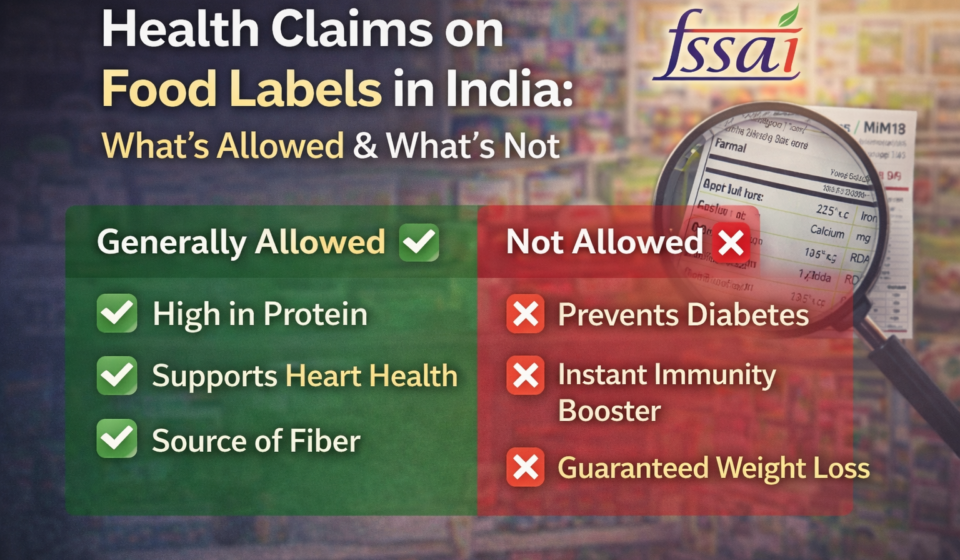
Types of Claims That Are Generally Allowed
1. Nutrient Content Claims
These refer to the presence of a nutrient.
Examples:
- “High in protein”
- “Low fat”
- “Source of fiber”
👉 Must meet defined thresholds
2. Function Claims
These describe the role of a nutrient in normal body functions.
Examples:
- “Calcium supports bone health”
- “Iron contributes to normal energy metabolism”
👉 Must be general—not exaggerated
Claims That Can Get You in Trouble
1. Disease Prevention or Cure Claims
❌ “Prevents diabetes”
❌ “Cures joint pain”
👉 These are not allowed for food products
2. Exaggerated or Misleading Claims
❌ “Instant immunity booster”
❌ “Guaranteed weight loss”
👉 If it sounds too strong, it’s likely non-compliant
3. Unsupported Claims
Any claim without:
- Scientific backing
- Proper wording
👉 Can be challenged or rejected
The Grey Area (Where Most Brands Fail)
Many brands don’t make outright illegal claims.
Instead, they:
- Use vague language
- Overstate benefits
- Combine marketing with compliance incorrectly
👉 This creates risk without realizing it
What You Should Check Before Finalizing Your Label
- Are your claims clearly defined?
- Are they backed by accepted standards?
- Are you avoiding disease-related language?
- Is the wording accurate and not exaggerated?
👉 If unsure, review carefully before printing
Why This Is Harder for Nutraceuticals
For supplements and nutraceuticals:
- Claims are central to marketing
- Scrutiny is higher
- Regulations are stricter
👉 Small mistakes here can have bigger consequences
A Smarter Way to Avoid Risk
Instead of guessing what’s allowed:
👉 Review your label from a compliance perspective before launch
A structured check helps you:
- Identify risky claims
- Adjust wording
- Avoid rejection
Quick Reality Check
If your label includes:
- Strong benefit statements
- Health-related promises
- Functional claims
👉 It’s worth reviewing carefully
Why This Matters Going Forward
As the market grows:
- Regulations will tighten
- Enforcement will increase
- Platforms will be stricter
👉 Brands that get this right early will scale faster
👉 Before You Print Your Packaging
Take a moment to review your claims.
It can:
- Prevent costly mistakes
- Improve approval chances
- Protect your brand
👉 You can run a quick compliance check using LabelVeda to identify risky claims before going to market