FSSAI Seizes ₹31 Lakh Alkaline Water Stock: What Food Brands Should Learn About Label Compliance

In a recent enforcement action,
Food Safety and Standards Authority of India
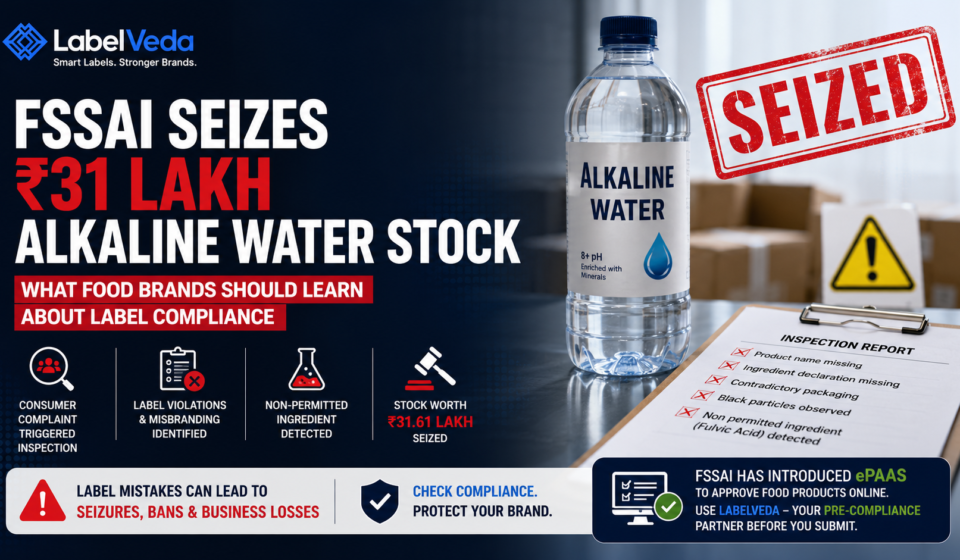
West Region seized alkaline water stock worth approximately ₹31.61 lakh following serious compliance violations.
And the most important takeaway?
👉 The issue wasn’t just about ingredients.
👉 It was also about label compliance and declarations
What Triggered the Investigation?
According to the official FSSAI press release, the case began with:
👉 A consumer complaint filed through the Food Safety Connect portal.
Following this, authorities conducted an inspection at the manufacturing facility in Gujarat.
What Violations Were Found?
During inspection, officials reportedly identified multiple issues including:
- Product name missing on the front of the package
- Missing ingredient declaration
- Contradictory descriptions between primary and secondary packaging
- Presence of visible black particles in the product
Further laboratory analysis reportedly detected:
👉 Fulvic acid — a substance not permitted under current FSSAI regulations.
Why This Matters to Every Food Brand
This case highlights something many brands still underestimate:
👉 Labels are not just packaging design.
They are:
- Regulatory documents
- Consumer communication tools
- Compliance checkpoints
And increasingly:
👉 A trigger point for enforcement action
The Shift Happening in Food Compliance
Food compliance in India is becoming more structured and more actively monitored.
Recent developments like:
- Stronger enforcement actions
- Consumer-driven inspections
- The introduction of the mandatory ePAAS approval system
…show that scrutiny is increasing across the food industry.
Common Label Mistakes Brands Still Make
Many food and nutraceutical brands continue to face issues such as:
- Missing mandatory declarations
- Incorrect ingredient listings
- Unsupported claims
- Inconsistent packaging information
- Non-compliant nutrition formats
👉 These problems often go unnoticed until inspection or marketplace review
The Real Cost of Compliance Failures
When labels fail compliance checks, the consequences can include:
- Product seizure
- Marketplace rejection
- Relabeling costs
- Delayed launches
- Regulatory scrutiny
- Damage to brand trust
👉 Fixing labels after production is always more expensive than checking them early
Why Nutraceutical & Functional Products Face Higher Risk
Categories like:
- Alkaline water
- Nutraceuticals
- Health supplements
- Functional beverages
…face greater scrutiny because they often involve:
- Health positioning
- Ingredient-related claims
- Functional benefits
👉 Which increases regulatory sensitivity
What Smart Brands Are Doing Differently
Instead of waiting for issues to surface later, smart brands:
✔ Review labels before production
✔ Validate ingredient declarations
✔ Check claims carefully
✔ Ensure packaging consistency
👉 Compliance is becoming part of product development—not an afterthought
Where LabelVeda Helps
LabelVeda helps food and supplement brands:
- Identify missing declarations
- Flag risky label elements
- Review compliance gaps early
- Prepare labels before launch or submission
👉 So issues are identified before they become expensive problems
📋 Quick Label Review Checklist
Before sending your product to market:
- Is the product name clearly visible?
- Are all ingredients declared properly?
- Is packaging information consistent?
- Are all claims compliant?
- Are all mandatory declarations included?
👉 If unsure, review before launch
🚀 Final Thought
The recent alkaline water seizure is a reminder that:
👉 Compliance is no longer optional detail work.
It directly affects:
- Product approvals
- Marketplace acceptance
- Consumer trust
- Business continuity
👉 Before You Finalize Your Product Label
Take a few minutes to validate your compliance approach.
👉 Use LabelVeda to identify label risks before they turn into costly enforcement issues.